
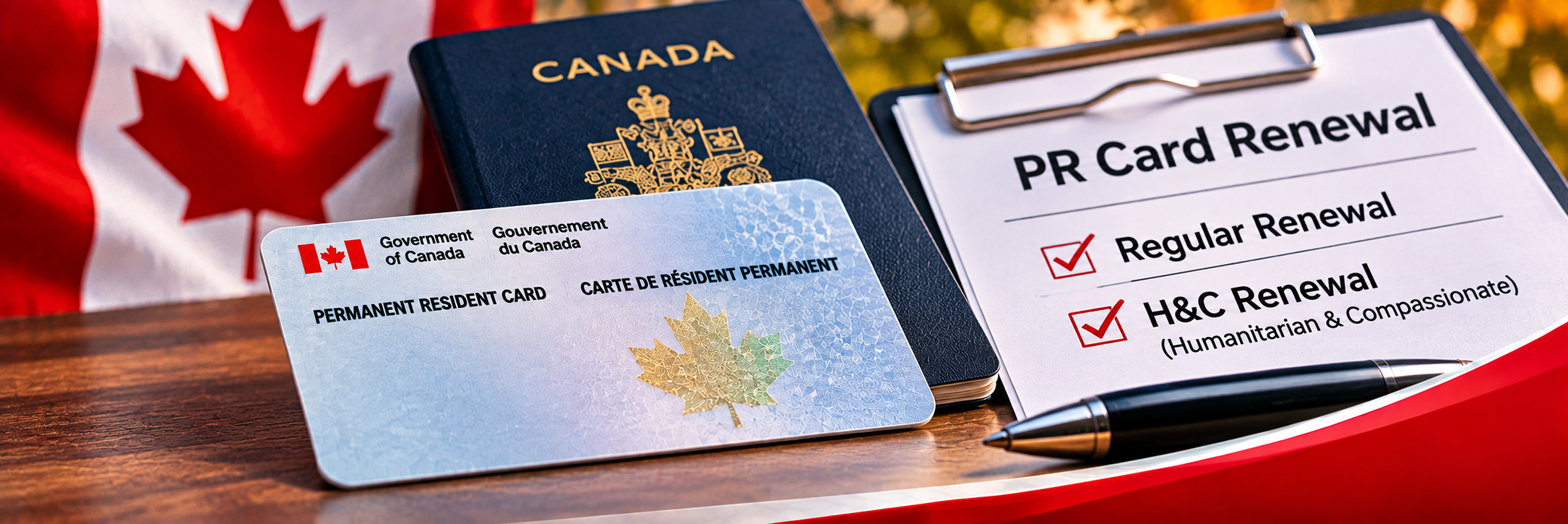
Permanent Resident (PR) Card Renewal
Maintain Your Permanent Resident Status in Canada
As a permanent resident of Canada, your PR Card is an important document confirming your immigration status and allowing you to travel to Canada by commercial transportation.
Whether your PR Card is expiring, has already expired or you have spent extended periods outside Canada, it is important to understand your renewal options and residency obligations.
Canadian permanent residents must generally satisfy a residency obligation of at least 730 days within every five-year period to maintain their permanent resident status.
However, not everyone meets this requirement. If you have spent significant time outside Canada, you may still have options to retain your permanent resident status through humanitarian and compassionate considerations.
At Neon Law Professional Corporation, we assist permanent residents with regular PR Card renewals and applications involving humanitarian and compassionate considerations. Our team assesses your travel history, reviews your residency obligation and helps prepare applications based on your individual circumstances.
1. Regular PR Card Renewal
A Permanent Resident Card is generally valid for five years, although some cards may be issued for shorter periods.
If your PR Card is expiring or has already expired, you may apply for a renewal, provided you satisfy the applicable requirements.
Who Can Apply?
You may generally apply for a PR Card renewal if you:
- Are a permanent resident of Canada.
- Are physically present in Canada when applying.
- Meet the residency obligation.
- Are not subject to an effective removal order.
- Have not become a Canadian citizen.
The 730-Day Residency Obligation
To maintain permanent resident status, you must generally accumulate at least 730 days of qualifying residency within a five-year period.
These days do not necessarily have to be consecutive.
Certain periods spent outside Canada may also count toward the residency obligation, including qualifying circumstances involving:
- Accompanying a Canadian citizen spouse or common-law partner abroad.
- Accompanying a Canadian citizen parent abroad, if you are a child.
- Employment outside Canada on a full-time basis by an eligible Canadian business or public service.
If you have been a permanent resident for less than five years, you must demonstrate that you will be able to satisfy the 730-day requirement by the fifth anniversary of becoming a permanent resident.
Documents Required for PR Card Renewal
Depending on your circumstances, supporting documents may include:
- Current or expired PR Card.
- Passport and travel documents.
- Travel history and entry records.
- Employment records and pay statements.
- CRA Notices of Assessment.
- Residential documents and lease agreements.
- Bank statements.
- Other evidence demonstrating your physical presence in Canada.
How Neon Law Can Help
We assist with:
- PR Card renewal applications.
- Residency obligation calculations.
- Review of travel history and absences.
- Assessment of supporting documents.
- Preparation and submission of renewal applications.
- Responses to IRCC requests for additional documents.
2. PR Card Renewal on Humanitarian and Compassionate Grounds
Have You Failed to Meet the 730-Day Residency Obligation?
Not every permanent resident is able to meet Canada’s residency obligation.
Family emergencies, serious medical conditions, circumstances beyond your control and other exceptional situations may prevent you from returning to Canada or maintaining sufficient physical presence.
If you have failed to meet the 730-day residency requirement, you may still have an opportunity to retain your permanent resident status through humanitarian and compassionate (H&C) considerations.
Under section 28(2)(c) of the Immigration and Refugee Protection Act (IRPA), immigration authorities must consider humanitarian and compassionate factors when assessing whether a permanent resident has complied with the residency obligation.
This assessment may take into account the circumstances surrounding your absence from Canada, the hardship you would face if you lost your permanent resident status and the best interests of any child directly affected.
At Neon Law Professional Corporation, we assist permanent residents with preparing H&C submissions in support of PR Card renewal applications.
What Are Humanitarian and Compassionate Grounds?
Humanitarian and compassionate considerations allow immigration authorities to examine exceptional personal circumstances when assessing a permanent resident’s failure to comply with the residency obligation.
Depending on the circumstances, relevant factors may include:
Medical Circumstances
Serious medical conditions, medical treatment requirements or the need to care for an ill family member may explain prolonged absences from Canada.
Family Circumstances
Family responsibilities, caregiving obligations, separation from immediate family members or other significant family circumstances may be relevant.
Circumstances Beyond Your Control
Political instability, armed conflict, travel restrictions, unforeseen emergencies and other circumstances preventing your return to Canada may be considered.
Establishment and Ties to Canada
Your employment history, family connections, residential history, financial interests and other ties to Canada may help demonstrate your connection to the country.
Best Interests of a Child
Where a child is directly affected, their best interests must be considered as an important factor. This may include the impact of losing permanent resident status on the child’s education, family relationships, stability and well-being.
Hardship Resulting From Loss of Permanent Resident Status
The consequences of losing permanent resident status may also be relevant, including separation from family members, disruption of established lives and other disproportionate hardships.
Each case is assessed individually. There is no guarantee that an H&C request will be accepted.
Evidence Supporting an H&C PR Card Renewal
A successful application requires more than simply explaining why you were outside Canada.
You must provide relevant evidence supporting your circumstances and demonstrating why humanitarian and compassionate considerations justify retaining your permanent resident status.
Depending on your case, evidence may include:
- Medical reports and hospital records.
- Documents relating to family emergencies.
- Evidence of political instability or unsafe conditions.
- Travel records and explanations of prolonged absences.
- Employment and financial records.
- Evidence of family and residential ties to Canada.
- Documents relating to affected children.
- Statements explaining the circumstances preventing your return.
- Other supporting evidence demonstrating hardship.
The quality, consistency and relevance of the evidence are important.
How Neon Law Can Help
Our services include:
- Assessment of residency obligation non-compliance.
- Review of travel history and prolonged absences.
- Identification of relevant humanitarian and compassionate factors.
- Legal submissions explaining the circumstances of non-compliance.
- Preparation of supporting evidence and documentation.
- Consideration of the best interests of affected children.
- Preparation and submission of PR Card renewal applications.
- Advice concerning negative residency obligation decisions and available legal remedies.
3. What Happens If Your PR Card Renewal Is Refused?
A refusal of a PR Card application may have serious consequences, particularly where IRCC determines that you have failed to meet the residency obligation.
Depending on the circumstances, you may have the right to appeal the decision to the Immigration Appeal Division (IAD).
An appeal may allow you to challenge the residency obligation determination and present humanitarian and compassionate considerations.
Relevant factors may include:
- The reasons for your prolonged absence from Canada.
- Your establishment and ties to Canada.
- The hardship resulting from losing permanent resident status.
- The best interests of any child directly affected.
- Other relevant humanitarian and compassionate circumstances.
If an appeal right is unavailable or inappropriate, judicial review before the Federal Court may be an option.
The appropriate legal remedy depends on the decision, the applicant’s location and the applicable legislation.
4. Important: An Expired PR Card Does Not Automatically Mean You Have Lost Permanent Resident Status
Your PR Card and your permanent resident status are two different things.
A PR Card is proof of your status and a travel document for returning to Canada by commercial transportation. It is not the document that grants or maintains your permanent resident status.
An expired PR Card does not automatically result in the loss of permanent resident status.
However, failing to meet the residency obligation may result in a determination that you have lost your status through the applicable immigration process.
If your PR Card has expired or you have spent extended periods outside Canada, it is important to obtain legal advice before making travel arrangements or submitting a renewal application.
How Neon Law Can Help
At Neon Law Professional Corporation, we understand that every permanent resident has a different immigration history and personal circumstances.
Whether you meet the residency obligation or require an H&C assessment, our team provides assistance with:
- Regular PR Card renewals.
- H&C-based PR Card renewal applications.
- Residency obligation assessments.
- Travel history and absence calculations.
- Humanitarian and compassionate legal submissions.
- Review of supporting documents.
- Applications involving medical and family circumstances.
- Immigration Appeal Division appeals.
- Federal Court judicial review.
- Advice concerning permanent resident status and travel documents.
Our approach is to assess your circumstances carefully and identify the appropriate legal pathway to protect your permanent resident status.
Frequently Asked Questions
Q: How many days must I stay in Canada to maintain my permanent resident status?
A: Generally, you must accumulate at least 730 days of qualifying residency within every five-year period.
Q: Can I renew my PR Card if I have not met the 730-day requirement?
A: You may request consideration on humanitarian and compassionate grounds. You must provide evidence explaining your circumstances and why you should be allowed to retain your permanent resident status.
Q: Can I renew my PR Card if it has already expired?
A: Yes. An expired PR Card does not automatically mean you have lost permanent resident status. You may apply for renewal if you meet the applicable requirements.
Q: What if I have lived outside Canada for several years?
A: Your circumstances should be assessed carefully. Certain periods abroad may count toward the residency obligation, and H&C considerations may also be available.
Q: What happens if IRCC refuses my PR Card renewal?
A: Depending on the circumstances, you may be able to appeal the decision to the Immigration Appeal Division or seek judicial review before the Federal Court.
Q: Can I apply for PR Card renewal from outside Canada?
A: Generally, no. You must be physically present in Canada to apply for a PR Card. If you are outside Canada without a valid PR Card, you may need to apply for a Permanent Resident Travel Document (PRTD).
Q: Does having a valid PR Card mean I have met the residency obligation?
A: Not necessarily. A valid PR Card does not guarantee that you have complied with the residency obligation. Your compliance may be assessed when you apply for another immigration document or seek to enter Canada.
Q: Can my family circumstances help my H&C application?
A: Yes. Relevant family circumstances may be considered, particularly where family members would experience hardship from the loss of your permanent resident status.
Q: Is an H&C PR Card renewal guaranteed?
A: No. Immigration authorities assess each case individually. The strength of the evidence and the circumstances surrounding your absences are important considerations.
Protect Your Permanent Resident Status
Your permanent resident status represents an important connection to Canada. If your PR Card is expiring, you have spent extended periods outside Canada or you are concerned about meeting the residency obligation, obtaining legal guidance is important.
At Neon Law Professional Corporation, we assist permanent residents with regular PR Card renewals and applications involving humanitarian and compassionate considerations.
Contact our team today to discuss your PR Card renewal and available immigration options.
Legal Disclaimer: The information on this page is provided for general informational purposes only and does not constitute legal advice. Residency obligations and humanitarian and compassionate assessments depend on individual circumstances and applicable immigration legislation. No particular outcome is guaranteed.